

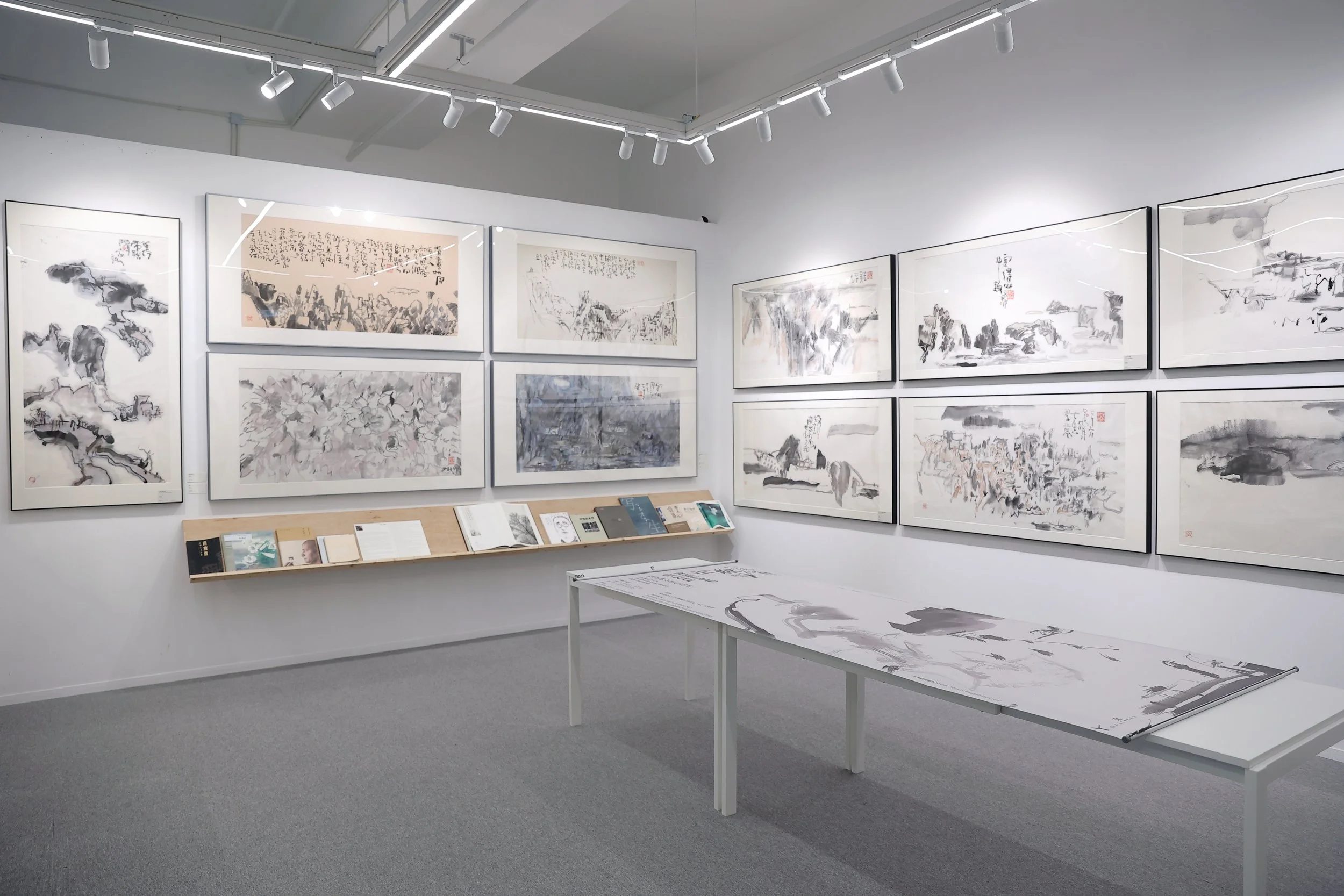
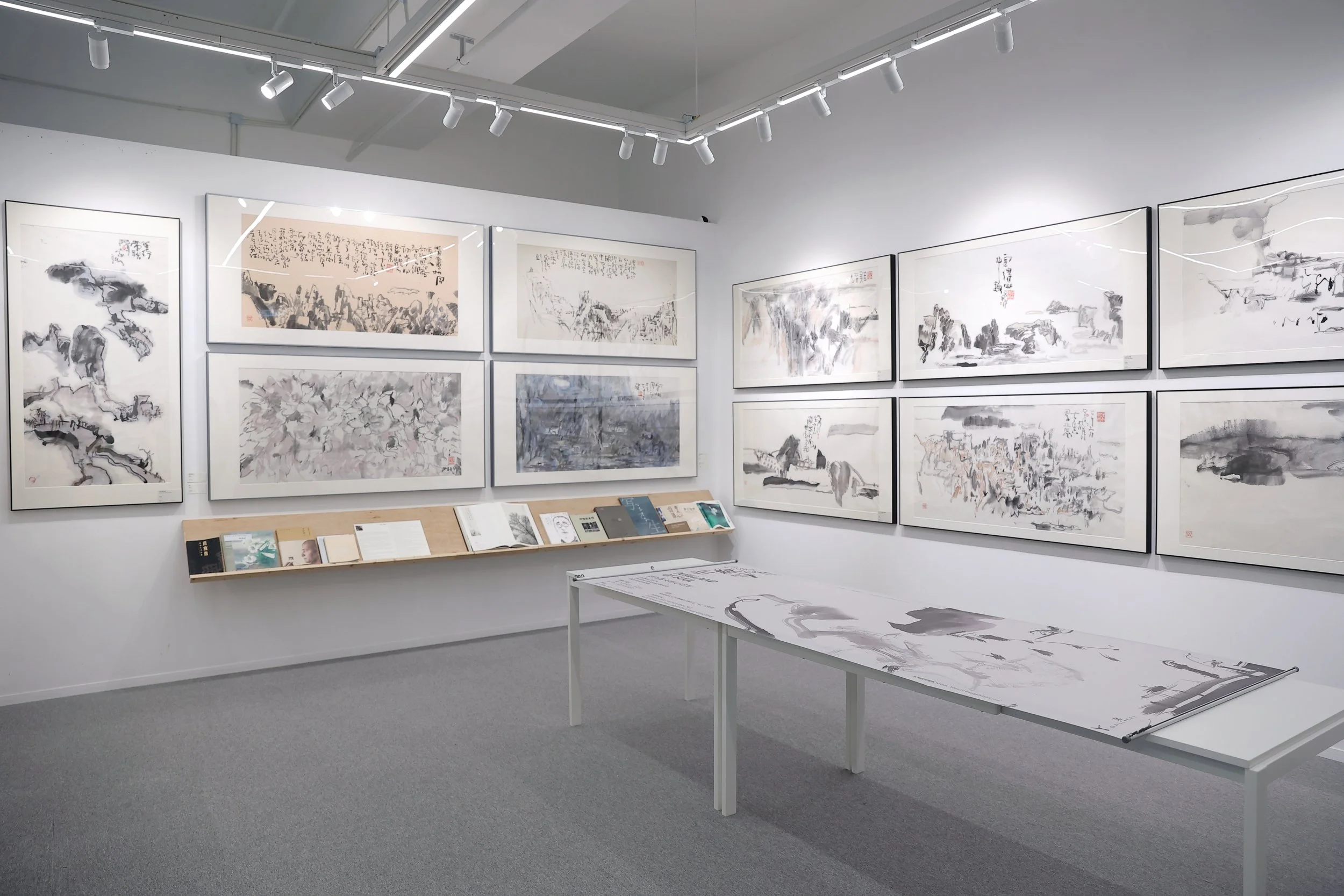
PURELAND OF SOUL - Jiahua Wu’s Chinese Ink-and-Brush Expressionism
24 APR 2026 - 30 SEP 2026
Although Jiahua Wu is widely known as a distinguished architect and professor in the related field, he has always maintained a deep passion for Chinese painting. This is no coincidence. For the past 60 years, he has dedicated himself primarily to teaching and practicing architecture and urban environmental planning. He has earned an excellent reputation in his field, wholly deserved. However, the public may not realize that he began studying painting at the very start of his architectural education. He has never stopped painting, nor has he ever ceased contemplating different painting styles and art history.Before the mid-1960s, including the years when Jiahua Wu was a student there, the Architecture Department of Tongji University placed a much stronger emphasis on art education than most other universities. The professors who taught art courses were all renowned masters of painting, most of whom had studied abroad. They provided the young Jiahua Wu with a higher level of foundational training and a broader vision than most of his peers at the time. Remarkably, they also possessed a profound grounding in Chinese culture and art.
JIahua Wu mastered foreign languages, traveled widely, and was proficient in both Eastern and Western art history. Ultimately, he chose Chinese ink painting as his medium of expression—a deliberate and conscious choice for his legacy. As an architect, sketching and figuration were his foundation, yet in ink art, he never confined himself to these. In his early years, he admired Huang Binhong, and traces of Huang’s influence can occasionally be seen in some of his works.What is most precious, however, is that after turning sixty, Wu boldly embraced abstraction in ink, calling it “Ink Expressionism”—a transformation I jokingly called his “mid-life reform.” After this shift, he abandoned traditional landscape brush techniques, but not replacing them with splashed ink and color. He kept paying his respect to the tradition that “calligraphy and ink painting share the same origin.” He integrates calligraphy into his paintings—not only inscribing characters as clouds and distant mountains but, more profoundly, embedding the essence of the calligraphic spirit into his brushstrokes. These innovations, rooted in tradition as he said, became uniquely his own, breaking free from academic conventions and forming what critic Yang Xiaoyan described as “a style beyond the reach of ordinary ink painters.” Huang Binhong’s influence remained only in the rhythmic vitality of his works—the emotional pulse that makes Wu’s art so moving. He often said that a good work is not what you make others see, but what others feel through it.
I never witnessed the side of him that was decisive and rigorous in architectural projects, nor the stern and exacting demeanor he displayed in the classroom. Most of our encounters were moments when he shared his new paintings with me, brimming with the excitement of a child—and I believe this is precisely the charm of art. Through his creations, I have glimpsed many facets of him: sometimes, it is his release from rational architectural considerations into the free, uninhibited dance of ink on paper; sometimes, his escape from the distortions of worldly affairs to preserve the sincerity of a childlike heart; sometimes, the indignation of his resistance against the injustices of reality; and sometimes, his sudden hesitation upon unrolling a blank sheet of paper, as if fearing to harm something pure. Of course, I have also seen the tranquility, joy, and playful spirit when he is at ease… His works deliberately veil the rational logic and structure of an architect, dissolving methodology into the intangible, rendering ink both intuitive and emotional. Visually, they bridge the shared aesthetics of East and West, piercing through linguistic barriers to strike directly at the soul. Whether or not one understands the language of ink art, whether or not one possesses cultivated aesthetic knowledge, pausing with genuine presence before his paintings allows one to find a resonance of emotion within them.
PREFACE
Y GALLERY
Unit C, 18/F, S22, No.22. Heung Yip Road, Wong Chuk Hang, Hong Kong
Tel: +852 6215 4589
Opening Hours: 11:00 - 18:00 (Tue-Fri) / 11:00 - 19:00 (Sat)
Closed: Sunday, Monday
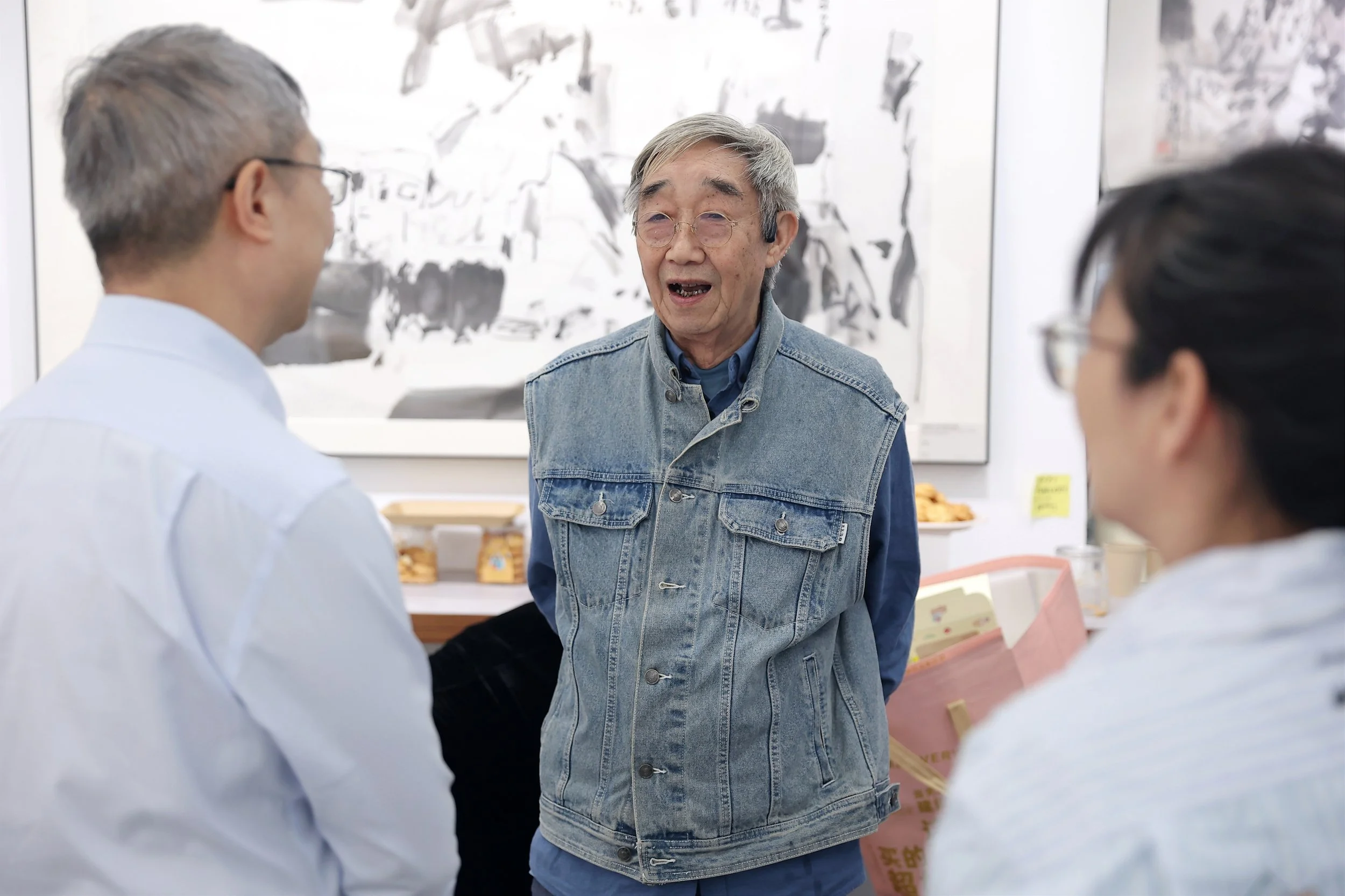
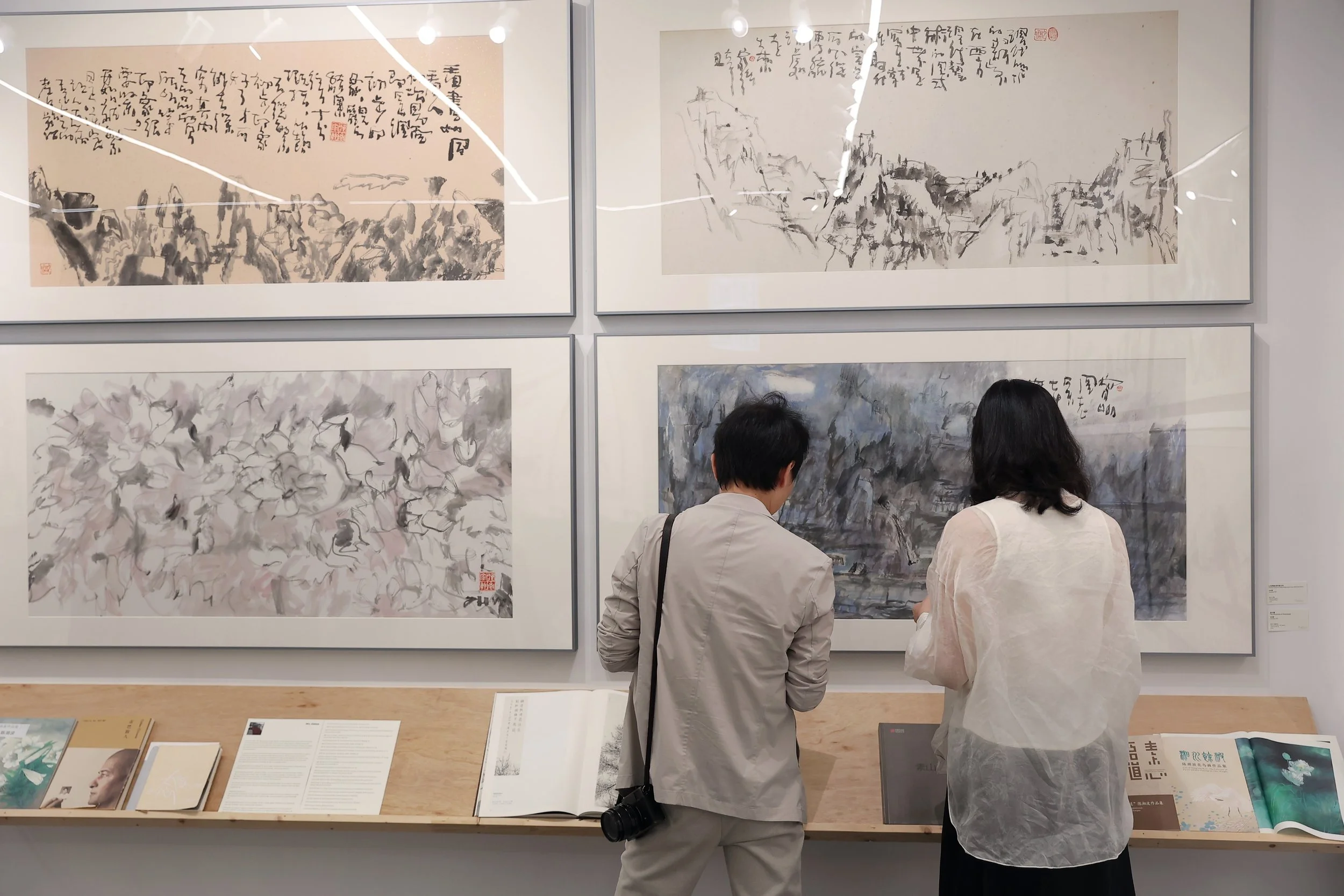
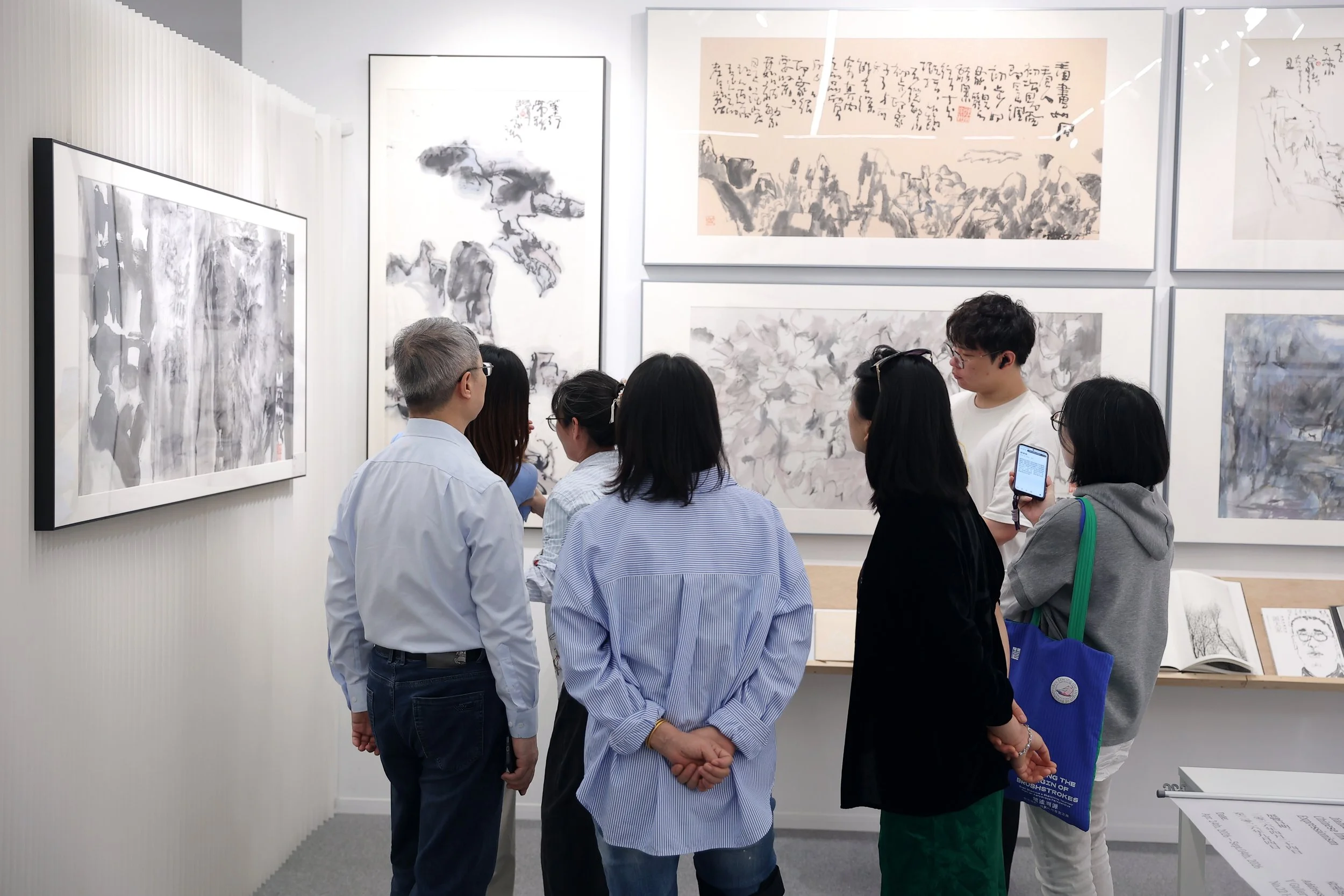
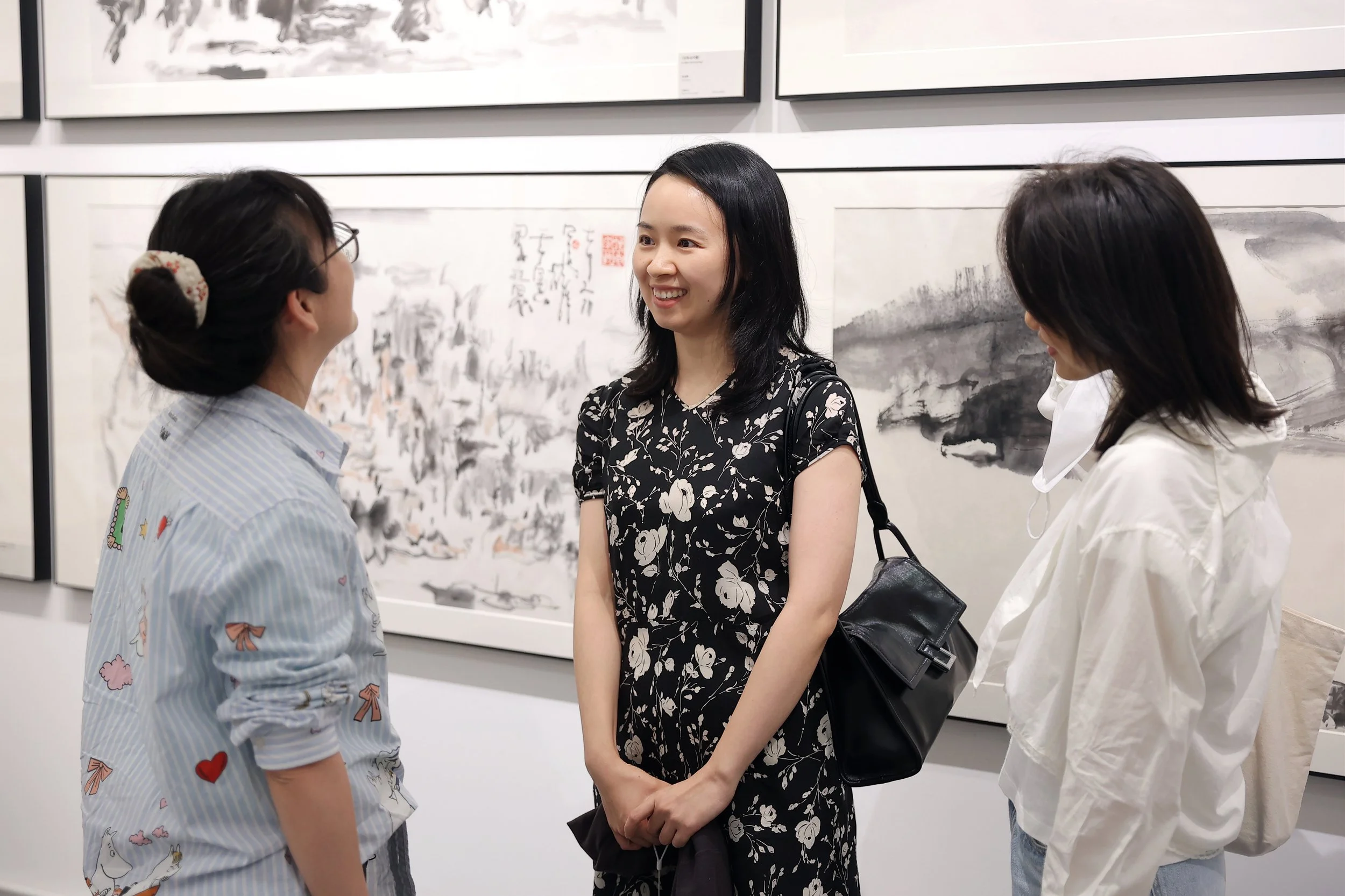
In his early years, Wu Jiahua pursued studies abroad, moving between Eastern and Western learning. Not only is he well-versed in architectural design, but he also has a deep passion for painting—particularly ink-wash art. His ink-wash works reflect the mutual influence of Eastern and Western traditions; leveraging his background in architecture, he draws interdisciplinary connections that have led to profound insights in his painting practice.
Wu Jiahua’s ink-wash art transcends the formal conventions of traditional brush and ink, entering a realm of “metaphysical” expression. In traditional Chinese painting, brush and ink techniques primarily serve to embody “ancient methods”—the mastery of established rules within formal aesthetics. Wu, however, abandons these rigid rules entirely: he reconfigures traditional brushwork, rhythmic patterns, and tonal variations, absorbing the techniques of Chinese ink-wash in a symbolic manner.
This approach subverts and discards the iconic imagery of traditional Chinese painting, instead expressing through pure form—endowing his works with a distinctly contemporary tendency.
His paintings emphasize the “calligraphic quality” and “uninhibited spirit” of Chinese ink-wash, evoking a sense of carefree ease (xiaoyao zizai). This quality mirrors the unruly freedom in his personality, rooted in the influence of Lao-Zhuang philosophy. As he himself put it: “Lao-Zhuang philosophy has granted me freedom; it has set my mind and spirit free to wander in leisure ever since.”
Ink paintings were collected by University of Sheffield, UK; MAPPIN Gallery, UK; Art Centre of Manchester, UK; Guan Shanyue Art Museum, Shenzhen; Painting Institution of Shenzhen;Hangzhou West Lake State Guesthouse, etc.
ARTIST | WU JIAHUA